
WORKING PAPERS
*indicates equal contribution
| Arechar, A. A., Mosleh, M., Pennycook, G., & Rand, D. G. Sharing intentions in survey experiments predict actual sharing behavior on social media. Available at PsyArXiv |
| Costello, T. H., Newton, C., Lin, H., & Pennycook, G. Intellectual humility questionnaires fail to predict metacognitive skill: Implications for theory and measurement. Available at PsyArXiv |
| Costello, T. H., Pelrine, K., Kowal, M., Arechar, A. A., Godbout, J-F., Gleave, A., Rand, D. G., & Pennycook, G. Large language models can effectively convince people to believe conspiracies. Available at PsyArXiv |
| Costello, T. H., Pennycook, G., & Rand, D. G. Just the facts: How dialogues with AI reduce conspiracy beliefs. Available at PsyArXiv |
| Costello, T. H., Pennycook, G., Willer, R., & Rand, D. G. Deep canvassing using AI. Available at PsyArXiv |
| Costello, T. H., Rabb, N., Stagnaro, M. N., Pennycook, G., & Rand, D. G. Reducing belief in conspiracy theories as they unfold using large language models. Available at PsyArXiv |
| Costello, T. H., Waldman, I., & Pennycook, G. Mapping the heterogeneity of political beliefs and rigidity. Available at PsyArXiv |
| Czarnek, G., Orchinik, R., Lin, H., Xu, H. G., Costello, T.H., Pennycook, G., & Rand, D. G. Addressing climate change skepticism and inaction using human-AI dialogues. Available at PsyArXiv |
| Fazio, L., Rand, D. G., Lewandowsky, S., Susmann, M., Berinsky, A. J., Guess, A. M., Kendeou, P., Lyons, B., Miller, J., Newman, E, Pennycook, G., Swire-Thompson, B., & Building a Better Toolkit Team. Combating misinformation: A megastudy of nine interventions designed to reduce the sharing of and belief in false and misleading headlines. Available at PsyArXiv |
| Guess, A., McGregor, S., Pennycook, G., & Rand, D. G. Unbundling digital media literacy tips: Results from two experiments. Available at PsyArXiv |
| Kowal, M., Timm, J., Godbout, J-F., Costello, T. H., Arechar, A. A., Pennycook, G., Rand, D. G., Gleave, A., & Pelrine, K. It’s the thought that counts: Evaluating the attempts of frontier LLMs to persuade on harmful topics. Available at arXiv |
| Levari, D. E., Martel, C., Orchinik, R., Bhui, R., Seli, P., Pennycook, G., & Rand, D. G. Blatantly false news increases belief in news that is merely implausible. Available at PsyArXiv |
| Lin, H., Garro, H., Wernerfelt, N., Shore, J. C., Hughes, A., Deisenroth, D., Barr, N., Berinsky, A., Eckles, D., Pennycook, G., & Rand, D. G. Reducing misinformation sharing at scale using digital accuracy prompt ads. Available at PsyArXiv |
| Martel, C., Allen, J., Pennycook, G., Rand, D. G. Political motives help rather than hinder crowdsourced fact-checking. Available at PsyArXiv |
| Orchinik, R., Rand, D. G., Pennycook, G., & Fazio, L. Repetition increases belief in implausible statements more than for plausible statements. Available at PsyArXiv |
| Rabb, N., Levontin, A. M., Berinsky, A., Pennycook, G., Costello, T. H., & Rand, D. G. Short dialogues with AI reduce belief in antisemitic conspiracy theories. Available at PsyArXiv |
| Spinoza-Martín, D., Bossin, E., Gilovich, T., & Pennycook, G. A brief therapeutic conversation with AI decreases intentions to exclusively seek human therapy. Available at PsyArXiv |
| Spinoza-Martín, D. & Pennycook, G. Increasing conflict between intuitions triggers deliberation. Available at PsyArXiv |
| von Sicherer, P. & Pennycook, G. Greenwashing training fosters a general skepticism toward advertisements. Available at PsyArXiv |
| Xu*, H. G., Costello*, T. H., Schwartz, J. L., Niccolai, L. M., Pennycook, G., & Rand, D. G. Personalized dialogues with AI effectively address parents’ concerns about HPV vaccination. Available at PsyArXiv |
PEER-REVIEWED PUBLICATIONS
2026
| Guay, B., Berinsky, A. J., Pennycook, G., & Rand, D. G. (in press). Examining partisan asymmetries in fake news sharing and the efficacy of accuracy prompt interventions. Journal of Politics. preprint |
| Pennycook, G., Costello, T. H., & Rand, D. G. (in press). Using artificial intelligence to better understand human intelligence. Current Directions in Psychological Science. |
| Schroeder, D. T., Cha, M., Baronchelli, A., Bostrom, N., Christakis, N. A., Garcia, D., …Pennycook, G. … Kunst, J. R. (2026). How malicious AI swarms can threaten democracy. Science, 391, 354-357. link preprint |
2025
| Allen, J., Pennycook, G., & Rand, D. G. (2025). Addressing misperceptions takes more than combating fake news. Trends in Cognitive Sciences, 29, 779-782. link |
| Binnendyk, J., Li, S., Costello, T. H., Hale, R., Moore, D. A., & Pennycook, G. (2025). Is overconfidence a trait? An adversarial collaboration. Psychological Science, 36, 941-951. link preprint |
| Boissin, E., Costello, T. H., Spinoza-Martín, D., Rand, D. G., & Pennycook, G. (2025). Dialogues with large language models reduce conspiracy beliefs even when the AI is perceived as human. PNAS Nexus, 4, pgaf325. link preprint |
| Boissin, E. & Pennycook, G. (2025). Who benefits from debiasing? Cognition, 262, 106166. link |
| Gervais, W. M., McKay, R., Brown-Iannuzzi, J. L., Ross, R. M., Pennycook, G., Jong, J., & Lanman, J. A. (2025). Belief in belief: Even atheists in secular countries show intuitive preferences favoring religious belief. Proceedings of the National Academy of Sciences, 122, e2404720122. link preprint |
| Lin, H., Czarnek, G., Lewis, B., White, J. P., Berinsky, A. J., Costello, T. H., Pennycook, G., & Rand, D. G. (2025). Persuading voters using human-AI dialogues. Nature. link |
| Pennycook, G., Binnendyk, J., & Rand, D. G. (2025). Overconfidently conspiratorial: Conspiracy believers are dispositionally overconfident and massively overestimate how much others agree with them. Personality and Social Psychology Bulletin. link preprint |
| Phillips*, S. C., Wang*, S. Y. N., Carley, K. M., Rand, D. G., & Pennycook, G. (2025) Emotional language reduces belief in false claims. Judgment and Decision Making. link preprint |
| Stagnaro, M. N. & Pennycook, G. (2025). On the role of analytic thinking in religious belief change: Evidence from over 50,000 participants in 16 countries. Cognition, 254, 105989. link preprint |
| Wang*, S. Y. N., Phillips*, S. C., Carley, K., Lin, H., & Pennycook, G. (2025). Limited effectiveness of psychological inoculation against misinformation in a social media feed. PNAS Nexus, 4, pgaf172. link preprint |
| Wilson, G. A., Pennycook, G., & Weber, T. J. (2025). Indicating consumer benefits increases willingness to pay for genetically modified foods even among the close-minded and overconfident. Journal of International Food & Agribusiness Marketing, 37, 844-861. link |
2024
| Binnendyk, J. & Pennycook, G. (2024). Individual differences in overconfidence: A new measurement approach.Judgment and Decision Making, 19, e28. link preprint |
| Bruns, H., Dessart, F.J., Krawczyk, M. W., Lewandowsky, S., Pantazi, M., Pennycook, G., Schmid, P., & Smillie, L. (2024). Investigating the role of source and source trust in prebunks and debunks of misinformation in online experiments across four EU countries. Scientific Reports, 14, 20723. link preprint. |
| Costello, T. H., Pennycook, G., & Rand, D. G. (2024). Durably reducing conspiracy beliefs through dialogues with AI. Science, 385, 1183. link preprint |
| Ghezae, I., Jordan, J., Gainsburg, I., Mosleh, M., Pennycook, G., Willer, R., & Rand, D. G. (2024). Partisans neither expect nor receive reputational rewards for sharing falsehoods over truth online. PNAS Nexus, pgae287. link preprint |
| Kozyreva, A., Lorenz-Spreen, P., Herzog, S. M., Ecker, U. K. H., Lewandowsky, S., Hertwig, R., … Pennycook, G. … Wineburg, S. (2024). Toolbox of interventions against online misinformation. Nature Human Behavior, 8, 1044–1052. link preprint |
| Lin, H., Savio, M. T., Huang, X., Steiger, M., Guevara, R. L., Szostak, D., Pennycook, G. & Rand, D. G. (2024). Accuracy prompts protect professional content moderators from the illusory truth effect. PNAS Nexus, pgae481. link preprint |
| Martel, C., Allen, J., Pennycook, G., & Rand, D. G. (2024). Crowds can effectively identify misinformation at scale. Perspectives on Psychological Science, 19, 477-488. link preprint |
| Martel, C., Rathje, S., Clark, C. J., Pennycook, G., Van Bavel, J. J., Rand, D. G., & van der Linden, S. (2024). On the efficacy of accuracy prompts across partisan lines: An adversarial collaboration. Psychological Science, 35, 435-450. link preprint |
| Mosleh, M., Yang, Q., Zaman, T., Pennycook, G., Rand, D. G. (2024). Differences in misinformation sharing can lead to politically asymmetric sanctions. Nature, 634, 609-616. link preprint |
| Newton, C., Feeney, J., & Pennycook, G. (2023). On the disposition to think analytically: Four distinct intuitive-analytic thinking styles. Personality and Social Psychology Bulletin, 50, 906-923. link preprint |
| Pennycook, G., Berinsky, A. J., Bhargava, P., Lin, H., Cole, R., Goldberg, B., Lewandowsky, S., & Rand, D. G. (2024). Inoculation and accuracy prompting increase accuracy discernment in combination but not alone. Nature Human Behavior, 8, 2330-2341. link preprint |
| Ruggeri, K., Stock, F., Haslam, S.A., … Pennycook, G. … Van Bavel, J. J.,& Willer, R. (2024). A synthesis of evidence for policy from behavioural science during COVID-19. Nature, 625, 134–147. link preprint |
| Rydz, E., Telfer, J., Quinn, E. K., S. S., Holmes, E., Pennycook, G., & Peters, C. E. (2024). ‘Canadians’ knowledge of cancer risk factors and belief in cancer myths. BMC Public Health, 24, 329. link |
2023
| Arechar, A. A., Allen, J., Berinsky, A., Cole, R., Epstein, Z., Garimella, K., Gully, A., Lu, J. G., Ross, R. M., Stagnaro, M. N., Zhang, Y., Pennycook*, G., & Rand*, D. G. (2023). Understanding and Combating Online Misinformation Across 16 Countries on Six Continents. Nature Human Behavior, 7, 1502-1513. link preprint |
| Bago, B., Rand, D. G., Pennycook, G. (2023). Reasoning about climate change. PNAS Nexus, 2, 100. link preprint |
| Bhargava, P., MacDonald, K., Newton, C., Lin, H., & Pennycook, G. (2023). How effective are TikTok misinformation debunking videos? Harvard Kennedy School Misinformation Review, 4, 1-17. link |
| Chen, C. X., Pennycook, G., & Rand, D. G. (2023). What makes news sharable on social media? Journal of Quantitative Description: Digital Media, 3, 1-27. link preprint |
| Celadin, T., Capraro, V., Pennycook, G., & Rand, D. G. (2023). Displaying news source trustworthiness ratings reduces sharing intentions for false news posts. Journal of Online Trust and Safety, 1, 1-20. link |
| Epstein, Z., Sirlin, N., Arechar, A. A., Pennycook, G., & Rand, D. G. (2023). The social media context interferes with truth discernment. Science Advances, 9, eabo616. link preprint |
| Erlich, A., Garner, C., Pennycook, G., & Rand, D. G. (2023). Does analytic thinking insulate against pro-Kremlin disinformation? Evidence from Ukraine. Political Psychology, 44, 79-94. link preprint |
| Guay, B., Berinsky, A. J., Pennycook, G., & Rand, D. G. (2023) How to think about whether misinformation interventions work. Nature Human Behavior, 7, 1231-1233. link preprint |
| Lin, H., Pennycook, G., & Rand, D. G. (2023). Thinking more or thinking differently? Using drift-diffusion modeling to illuminate why accuracy prompts decrease misinformation sharing. Cognition, 230, 105312. link preprint |
| Lin, H., Rand, D. G. & Pennycook, G. (2023). Conscientiousness does not moderate the association between political ideology and susceptibility to fake news sharing. Journal of Experimental Psychology: General, 152, 3277–3284. link preprint |
| Lin, H., Lasser, J., Lewandowsky, S., Cole, R., Gully, A., Rand, D. G., & Pennycook, G. (2023). High level of agreement across different news domain quality ratings. PNAS Nexus, 2, pgad286. link preprint |
| Muda, R., Pennycook, G., Pieńkosz, D., & Bialek, M. (2023). People are worse at detecting fake news in their foreign language. Journal of Experimental Psychology: Applied, 29, 712-724. link preprint |
| Pennycook, G. (2023). A framework for understanding reasoning errors: From fake news to climate change and beyond. Advances in Experimental Social Psychology, 67, 131-208 link preprint |
| Pennycook, G., Bago, B., & McPhetres, J. (2023). Science beliefs, political ideology, and cognitive sophistication. Journal of Experimental Psychology: General, 152, 80-97. link preprint |
| Smith, D., Zhu, D. T., Hawken, S., Bota, A. B., Mithani, S. S., Marcon, A., Pennycook, G., Greyson, D., Caulfield, T., Graves, F., Smith, J., & Wilson, K. (2023). The influence of sociodemographic factors on COVID-19 vaccine certificate acceptance: A cross-sectional study. Human Vaccines & Immunotherapeutics, 19, 2220628. link |
2022
| Bago, B., Rand, D. G., & Pennycook, G. (2022). Does deliberation decrease belief in conspiracies? Journal of Experimental Social Psychology, 103, 104395. link preprint |
| Binnendyk, J. & Pennycook, G. (2022). Intuition, reason, and conspiracy beliefs. Current Opinion in Psychology, 47, 101387. link preprint |
| Longoni, C., Fradkin, A., Cian, L., & Pennycook, G. (2022). News from generative Artificial Intelligence is believed less. Proceedings of the 2022 ACM Conference on Fairness, Accountability, and Transparency (FAccT ’22). link preprint |
| Mosleh, M., Pennycook, G., & Rand, D. G. (2022). Field experiments on social media. Current Directions in Psychological Science, 31, 69–75. link preprint |
| Pennycook, G., McPhetres, J. Bago, B., & Rand, D. G. (2022). Beliefs about COVID-19 in Canada, the U.K., and the U.S.A.: A novel test of political polarization and motivated reasoning. Personality and Social Psychology Bulletin, 48, 750-765. link preprint |
| Pennycook, G. & Rand, D. G. (2022). Nudging social media sharing towards accuracy. The Annals of the American Academy of Political and Social Science, 700, 152-164. link preprint |
| Pennycook, G. & Rand, D. G. (2022). Accuracy prompts are a replicable and generalizable approach for reducing the spread of misinformation. Nature Communications, 13, 2333. pdf preprint |
2021
| Allen, J., Arechar, A. A., Pennycook, G., & Rand, D. G. (2021). Scaling up fact-checking using the wisdom of the crowds. Science Advances, 7, 36. link preprint |
| Brashier, N. M., Pennycook, G., Berinsky, A., & Rand, D. G. (2021). Timing matters when correcting fake news. Proceedings of the National Academy of Sciences, 118, e2020043118. link |
| Epstein, Z, Berinsky, B., Cole, R., Gully, A., Pennycook, G., & Rand, D. G. (2021). Developing an accuracy-prompt toolkit to reduce COVID-19 misinformation online. The Harvard Kennedy School Misinformation Review. link |
| Jahanbakhsh, F., Zhang, A. X., Berinsky, A. J., Pennycook, G., Rand, D. G., & Karger, D. R. (2021). Exploring lightweight interventions at posting time to reduce the sharing of misinformation on social media. CSCW ’21: Proceedings of the 24th ACM Conference on Computer-Supported Cooperative Work and Social Computings. preprint |
| McPhetres, J., Rand, D. G., & Pennycook, G. (2021). Character deprecation in fake news: Is it in supply or demand? Group Processes & Intergroup Relations, 24, 624-637. link preprint |
| Mosleh, M., Pennycook, G. Arechar, A. A., & Rand, D. G. (2021). Cognitive reflection correlates with behavior on Twitter. Nature Communications, 12, 921. link preprint |
| Pennycook, G.*, Epstein, Z.*, Mosleh, M.*, Arechar, A. A., Eckles, D., & Rand, D. G. (2021). Shifting attention to accuracy can reduce misinformation online. Nature, 592, 590-595. link preprint |
| Pennycook, G., Binnendyk, J., Newton, C., & Rand, D. G. (2021). A practical guide to doing behavioural research on fake news and misinformation. Collabra, 7, 25293. link preprint |
| Pennycook, G. & Rand, D. G. (2021). Examining false beliefs about voter fraud in the wake of the 2020 Presidential Election. The Harvard Kennedy School Misinformation Review. link |
| Pennycook, G. & Rand, D. G. (2021). The psychology of fake news. Trends in Cognitive Sciences, 25, 388-402. link preprint |
| Ross, R. M., Rand, D. G., & Pennycook, G. (2021). Beyond “fake news”: Analytic thinking and the detection of false and hyperpartisan news headlines. Judgment and Decision Making, 16, 484-504. pdf |
| Scherer, L. D., McPhetres, J., Pennycook, G., Kempe, A., Allen, L. A., Knoepke, C. E., Tate, C. E., & Matlock, D. D. (2021). Who is susceptible to online health misinformation? A test of four psychosocial hypotheses. Health Psychology, 40, 274-284. link preprint |
| Tappin, B. M., Pennycook, G. & Rand, D. G. (2021) Rethinking the link between cognitive sophistication and politically motivated reasoning. Journal of Experimental Psychology: General, 150, 1095-1114. link preprint |
2020
| Bago, B., Rand, D. G., & Pennycook, G. (2020). Fake news, fast and slow: Deliberation reduces belief in false (but not true) news headlines. Journal of Experimental Psychology: General, 149, 1608-1613. pdf preprint |
| Bronstein, M., Pennycook, G., Buonomano, L., & Cannon, T. D. (2020). Belief in fake news, responsiveness to cognitive conflict, and analytic reasoning engagement. Thinking and Reasoning, 27, 510-535. link |
| De keersmaecker, J., Dunning, D., Pennycook, G., Rand, D. G., Sanchez, C., Unkelbach, C., & Roets, A. (2020). Investigating the robustness of the illusory truth effect across individual differences in cognitive ability, need for cognitive closure, and cognitive style. Personality and Social Psychology Bulletin, 46, 204-215. link preprint |
| Dias, N., Pennycook, G. & Rand, D. G. (2020). Emphasizing publishers does not effectively reduce susceptibility to misinformation on social media. The Harvard Kennedy School Misinformation Review. pdf |
| Epstein, Z., Pennycook, G. & Rand, D. G. (2020) Will the crowd game the algorithm? Using layperson judgments to combat misinformation on social media by downranking distrusted sources. CHI ’20: Proceedings of the 2020 CHI Conference on Human Factors in Computing Systems. link preprint |
| Martel, M., Pennycook, G. & Rand, D. G. (2020). Reliance on emotion promotes belief in fake news. Cognitive Research: Principles and Implications, 5, 47. link preprint |
| Mosleh, M., Pennycook, G. & Rand, D. G. (2020). Self-reported willingness to share political news articles in online surveys correlates with actual sharing on Twitter. PLOS One, 15, e0228882. pdf |
| Pennycook, G., Bear, A., Collins, E., & Rand, D. G. (2020). The implied truth effect: Attaching warnings to a subset of fake news headlines increases perceived accuracy of headlines without warnings. Management Science, 66, 4921-5484. pdf preprint |
| Pennycook, G., Cheyne, J. A., Koehler, D. J., & Fugelsang, J. A. (2020). On the belief that beliefs should change according to evidence: Implications for conspiratorial, moral, paranormal, political, religious, and science beliefs. Judgment and Decision Making, 15, 476-498. pdf |
| Pennycook, G., McPhetres, J. Zhang, Y., Lu, J. G. & Rand, D. G. (2020). Fighting COVID-19 misinformation on social media: Experimental evidence for a scalable accuracy nudge intervention. Psychological Science, 31, 767-905. link preprint |
| Pennycook, G. & Rand, D. G. (2020). Who falls for fake news? The roles of bullshit receptivity, overclaiming, familiarity, and analytic thinking. Journal of Personality, 88, 185-200. link preprint |
| Scherer, L. D. & Pennycook, G. (2020). Who is susceptible to online health misinformation? American Journal of Public Health, 111, S276-S277. link |
| Tappin, B. M., Pennycook, G. & Rand, D. G. (2020). Thinking clearly about causal inferences of politically motivated reasoning: Why paradigmatic study designs often undermine causal inference. Current Opinion in Behavioral Sciences, 34, 81-87. link preprint |
| Tappin, B. M., Pennycook, G. & Rand, D. G. (2020). Bayesian or biased? Analytic thinking and political belief updating. Cognition, 204, 104375. link preprint |
| Van Bavel, J. J., Baicker, K., Boggio, P. S., Capraro, V., Cichocka, A., Cikara, M., Crockett, M. J., Crum, A. J., Douglas, K. M., Druckman, J. N. Drury, J., Dube, O., Ellemers, N., Finkel, E. J., Fowler, J. H., Gelfand, M., Han, S., Haslam, S. A., Jetten, J., Kitayama, S., Mobbs, D., Napper, L. E., Packer, D. J., Pennycook, G., Peters, E., Petty, R. E., Rand, D. G., Reicher, S. D., Schnall, S., Shariff, A., Skitka, L. J., Smith, S. S., Sunstein, C. R., Tabri, N., Tucker, J. A., van der Linden, S., Van Lange, P. A. M., Weeden, K. A., Wohl, M. J. A., Zaki, J., Zion, S. & Willer, R. (2020). Using social and behavioural science to support COVID-19 pandemic response. Nature Human Behavior, 4, 460-471. pdf preprint |
2019
| Bronstein, M. V., Pennycook, G. Bear, A., Rand, D. G., & Cannon, T. D. (2019). Belief in fake news is associated with delusionality, dogmatism, religious fundamentalism, and reduced analytic thinking. Journal of Applied Research in Memory and Cognition, 8, 108-117. link preprint |
| Bronstein, M. V., Pennycook, G., Joorman, J., Corlett, P. R., & Cannon, T. D. (2019). Dual-process theory, conflict processing, and delusional belief. Clinical Psychology Review, 72, 101748. pdf link |
| De Neys, W., & Pennycook, G. (2019). Logic, fast and slow: Advances in dual-process theorizing. Current Directions in Psychological Science, 28, 503-509. pdf link |
| Fazio, L., Rand, D.G., & Pennycook, G. (2019). Repetition increases perceived truth equally for plausible and implausible statements. Psychonomic Bulletin & Review, 26, 1705–1710. link preprint |
| Koehler, D. K., & Pennycook, G. (2019). How the public, and scientists, perceive advancement of knowledge from conflicting study results. Judgment and Decision Making 14, 671-682. pdf |
| Pennycook, G. & Rand, D. G. (2019). Fighting misinformation on social media using crowdsourced judgments of news source quality. Proceedings of the National Academy of Sciences, 116, 2521-2526. link (OA) preprint |
| Pennycook, G. & Rand, D. G. (2019). Lazy, not biased: Susceptibility to partisan fake news is better explained by lack of reasoning than by motivated reasoning. Cognition, 188, 39-50. link preprint |
| Pennycook, G. & Rand, D. G. (2019). Cognitive reflection and the 2016 US Presidential Election. Personality and Social Psychology Bulletin, 45, 224-239. link preprint |
| Ross*, R. M., Brown-Iannuzzi*, J. L., Gervais, W. M., Jong, J., Lanman, J. A., McKay, R., & Pennycook, G. (2019). Measuring supernatural belief using the affect misattribution procedure. Religion, Brain and Behavior, 10, 393-406. link |
| Stagnaro*, M. N., Ross*, R. M., Pennycook, G. & Rand, D. G. (2019). Cross-cultural support for a link between analytic thinking and disbelief in God: Evidence from India and the United Kingdom. Judgment and Decision Making, 14, 179-186. link (pdf) |
2018
| Lazer*, D., Baum*, M., Benkler, J., Berinsky, A., Greenhill, K., Menczer, F., Metzger, M., Nyhan, B., Pennycook, G., Rothschild, D., Sloman, S., Sunstein, C., Thorson, E., Watts, D., & Zittrain, J. (2018). The science of fake news. Science, 9, 1094-1096. link |
| Pennycook, G., Cannon, T. D., & Rand, D. G. (2018). Prior exposure increases perceived accuracy of fake news. Journal of Experimental Psychology: General, 147, 1865-1880. pdf preprint |
| Pennycook, G. & Thompson, V. A. (2018). An analysis of the Canadian cognitive psychology job market (2006-2016). Canadian Journal of Experimental Psychology, 72, 71-80. pdf preprint |
| Stagnaro, M. N., Pennycook, G., & Rand, D. G. (2018) Performance on the Cognitive Reflection Test is stable across time. Judgment and Decision Making, 13, 260–267. pdf |
| Thompson, V. A., Pennycook, G., Trippas, D. & Evans, J. St. B. T. (2018). Do smart people have better intuitions? Journal of Experimental Psychology: General, 147, 945-961. pdf |
| Trippas*, D., Kellen*, D., Singmann*, H., Pennycook, G., Koehler, D. J., Fugelsang, J. A., & Dubé, C. (2018). Characterizing belief bias in syllogistic reasoning: A hierarchical-bayesian meta-analysis of ROC data. Psychonomic Bulletin & Review, 25, 2141–2174. link preprint |
2017
| Bialek*, M. & Pennycook*, G. (2017). The cognitive reflection test is robust to multiple exposures. Behavior Research Methods, 50, 1953–1959. link |
| Pennycook, G., Ross, R.M., Koehler, D.J. & Fugelsang, J.A. (2017). Dunning-Kruger effects in reasoning: Theoretical implications of the failure to recognize incompetence. Psychonomic Bulletin & Review, 24, 1774-1784. link |
2016
| Pennycook, G., Cheyne, J.A., Koehler, D.J. & Fugelsang, J.A. (2016). Is the cognitive reflection test a measure of both reflection and intuition? Behavior Research Methods, 48, 341–348. link |
| Pennycook, G., Ross, R.M., Koehler, D.J., & Fugelsang, J.A. (2016). Atheists and agnostics are more reflective than religious believers: Four empirical studies and a meta-analysis. PLOS One, 11, e0153039. link (OA) |
| Ross, R. M., Pennycook, G., McKay, R., Gervais, W. M., Langdon, R., & Coltheart, M. (2016). Analytic thinking style, not delusional ideation, predicts data gathering in a large beads task study. Cognitive Neuropsychiatry, 4, 300-314. link |
| Sterling, J. L., Jost, J. T., & Pennycook, G. (2016). Are neoliberals more susceptible to bullshit? Judgment and Decision Making, 11, 352–360. pdf |
2015
| Barr*, N., Pennycook*, G., Stolz, J.A., & Fugelsang, J.A. (2015). The brain in your pocket: Evidence that Smartphones are used to supplant thinking. Computers in Human Behavior, 48, 473-480. link |
| Barr, N., Pennycook, G., Stolz, J.A., & Fugelsang, J.A. (2015). Reasoned connections: A dual-process perspective on creative thought. Thinking & Reasoning, 21, 61-75. [Special Issue on Creativity and Insight Problem Solving] link |
| Browne, M., Thomson, P., Rockloff, M., & Pennycook, G. (2015). Going against the herd: Understanding the psychosocial factors underlying the ‘vaccination confidence gap’. PLOS One, 10, e1032562. link |
| Meyer, A., Frederick, S., Burnham, T., Guevara Pinto, J. D., Boyer, T. W., Ball, L. J., Pennycook, G., Ackerman, R., & Thompson, V.A. (2015). Disfluent fonts don’t help people solve math problems. Journal of Experimental Psychology: General, 144, e16-e30. link |
| Medimorec*, S. & Pennycook*, G. (2015). The language of denial: Text analysis reveals differences in language use between climate change proponents and skeptics. Climatic Change, 1-9. link |
| Pennycook, G., Cheyne, J.A., Barr, N., Koehler, D.J. & Fugelsang, J.A. (2015) On the reception and detection of pseudo-profound bullshit. Judgment and Decision Making, 10, 549-563. pdf |
| Pennycook, G., Fugelsang, J.A., & Koehler, D.J. (2015). What makes us think? A three-stage dual-process model of analytic engagement. Cognitive Psychology, 80, 34-72. link |
| Pennycook, G., Fugelsang, J.A., & Koehler, D.J. (2015). Everyday consequences of analytic thinking. Current Directions in Psychological Science, 24, 425-43. link preprint |
| Trippas, D., Pennycook, G., Verde, M.F., & Handley, S.J. (2015). Better but still biased: Analytic cognitive style and belief bias. Thinking & Reasoning, 21, 431-445. link |
2014
| Browne, M., Pennycook, G., Goodwin, B., & McHenry, M. (2014). Reflective minds and open hearts: Cognitive style and personality predict religiosity and spiritual thinking in a community sample. European Journal of Social Psychology, 44, 736-742. link |
| Pennycook, G., Cheyne, J.A., Barr, N., Koehler, D.J. & Fugelsang, J.A. (2014). Cognitive style and religiosity: The role of conflict detection. Memory & Cognition, 42, 1-10. link |
| Pennycook, G., Cheyne, J.A., Barr, N., Koehler, D.J. & Fugelsang, J.A. (2014). The role of analytic thinking in moral judgments and values. Thinking & Reasoning,20, 188-214. [Special Issue on Dual-Process Theories] link |
| Pennycook*, G., Trippas*, D., Handley, S. J., & Thompson, V.A. (2014). Base-rates: Both neglected and intuitive. Journal of Experimental Psychology: Learning, Memory, & Cognition, 40, 544-554. link |
2013
| Cheyne, J.A. & Pennycook, G. (2013). Sleep paralysis post-episode distress: Modeling potential effects of episode characteristics, general psychological distress, beliefs, and cognitive style. Clinical Psychological Science, 1, 135-148. link |
| Pennycook, G., Cheyne, J.A., Koehler, D.J. & Fugelsang, J.A. (2013). Belief bias during reasoning among religious believers and skeptics. Psychonomic Bulletin & Review, 20, 806-811. link |
| Thompson, V.A., Prowse Turner, J., Pennycook, G., Ball, L., Brack, H., Ophir, Y. & Ackerman, R. (2013). The role of answer fluency and perceptual fluency as metacognitive cues for initiating analytic thinking. Cognition, 128, 237-251. link |
2012
| Pennycook, G., Cheyne, J.A., Seli, P., Koehler, D.J. & Fugelsang, J.A. (2012). Analytic cognitive style predicts religious and paranormal belief. Cognition, 213, 335-346. link |
| Pennycook, G., Fugelsang, J.A. & Koehler, D.J. (2012). Are we good at detecting conflict during reasoning? Cognition, 124, 101-106. link |
| Pennycook, G. & Thompson, V.A. (2012). Reasoning with base-rates is routine, relatively effortless and context-dependent. Psychonomic Bulletin & Review, 19, 528-534. link |
2011
| Thompson, V.A., Prowse Turner, J. & Pennycook, G. (2011). Intuition, reason and metacognition. Cognitive Psychology, 63, 107-140. link |
COMMENTARIES & REPLIES
| Costello, T. H., Pennycook, G., & Rand, D. G. (2025). The problem with AI dialogue at scale—Response. Science, 387, 1158. link |
| Gervais, W. M., McKay, R., Brown-Iannuzzi, J. L., Ross, R. M., Pennycook, G., Jong, J., & Lanman, J. A. (2025). Reply to Quillien: Intuitive preferences and interpretive humility in intentionality judgments. Proceedings of the National Academy of Sciences. link |
| Pennycook, G. & Fazio, L. (2025). Editorial overview: The Psychology of Misinformation. Current Opinion in Psychology. link |
| Pennycook, G. (2023). Deliberation is (probably) triggered and sustained by multiple mechanisms. Behavioral and Brain Sciences. [Commentary on De Neys, 2022] link |
| Pennycook, G. & Rand, D. G. (2021). Lack of partisan bias in the identification of fake (versus real) news. Trends in Cognitive Sciences. [Commentary on Gawronski, 2021] link |
| Pasquetto, I. V., Swire-Thompson, B., Amazeen, M. A., Benevenuto, F., Brashier, N. M., Bond, R. M., Bozarth, L. C., Budak, C., Ecker, U. K. H., Fazio, L. K., Ferrara, E., Flanagin, A. J., Flammini, A., Freelon, D., Grinberg, N., Hertwig, R., Jamieson, K. H., Joseph, K., Jones, J. J., Garrett, R. K., Kreiss, D., McGregor, S., McNealy, J., Margolin, D., Marwick, A., Menczer, F., Metzger, M. J., Nah, S., Lewandowsky, S., Lorenz-Spreen, P., Ortellado, P., Pennycook, G., Porter, E., Rand, D. G., Robertson, R., Tripodi, F., Vosoughi, S., Vargo, C., Varol, O., Weeks, B. E., Wihbey, J., Wood, T. J., & Yang, K. (2020) Tackling misinformation: What researchers could do with social media data. The Harvard Kennedy School Misinformation Review, 8, 1-14. link |
| Pennycook, G. (2020). Belief bias and its significance for modern social science. Psychological Inquiry. [Commentary on Clark & Winegard, 2020] link osf |
| Pennycook, G., De Neys, W., Evans, J. St. B. T., Stanovich, K. E., & Thompson, V. A. (2018). The mythical dual-process typology. Trends in Cognitive Sciences. [Commentary on Melnikoff & Bargh, 2018] link |
| Pennycook, G. (2018). You are not your data. Behavioral and Brain Sciences. [Commentary on Zwaan, Etz, Lucas, & Donnelan, 2018] link |
| Pennycook, G. & Rand, D. G. (2017). The evolution of analytic thinking? Behavioral and Brain Sciences. [Commentary on Burkart, Schubiger, & van Schaik, 2017] link |
| Pennycook, G., Cheyne, J.A., Barr, N., Koehler, D.J. & Fugelsang, J.A. (2016) It’s still bullshit: Reply to Dalton. Judgment and Decision Making, 11, 123-125. link (pdf) |
| Pennycook, G., Fugelsang, J.A., Koehler, D.J., & Thompson, V.A. (2016) Commentary on: Rethinking fast and slow based on a critique of reaction-time reverse inference. Frontiers in Psychology, 7, 1174. link (OA) |
| Pennycook, G. & Ross, R.M. (2016). Commentary on: Cognitive reflection vs. calculation in decision making. Frontiers in Psychology, 7, 9. link (OA) |
| Pennycook, G. (2015). Domain generality in religious cognition. Religion, Brain & Behavior, 5, 247-250. [Commentary on Johnson, Li, & Cohen, 2015] link |
| Pennycook, G. (2014). Evidence that analytic cognitive style influences religious belief: Comment on Razmyar and Reeve (2014). Intelligence, 43, 21-26. link |
| Thompson, V.A., Ackerman, R., Sidi, Y., Ball, L., Pennycook, G., & Prowse Turner, J. (2013). The role of answer fluency and perceptual fluency in the monitoring and control of reasoning: Reply to Alter, Oppenheimer, & Epley (2013). Cognition, 128, 256-258. link |
CHAPTERS / HANDBOOKS
| Binnendyk, J., Newton, C., & Pennycook, G. (forthcoming). The influence of intuitive-analytic thinking styles on beliefs. Oxford Handbook of the Cognitive Science of Belief. Oxford University Press. |
| Pennycook, G., Newton, C. & Thompson, V.A. (2022). Base-rate neglect. In R. Pohl (Ed.). Cognitive Illusions: Intriguing Phenomena in Thinking, Judgment, and Memory (3rd ed.). Hove, UK: Psychology Press. |
| Lewandowsky, S., Cook, J., Schmid, P., Holford, D. L., Finn, A., Lombardi, D., Al-Rawi, A. K., Thomson, A., Leask, J., Juanchich, M., Anderson, E. C., Sah, S., Vraga, E. K., Gavaruzzi, T., Rapp, D. N., Amazeen, M. A., Sinatra, G. M., Kendeou, P., Armaos, K. D., Newman, E. J., Ecker, U. K. H., Tapper, K., Bruns, H. H. B., Pennycook, G., Betsch, C., Hahn, U. (2021). The COVID-19 Vaccine Communication Handbook. A practical guide for improving vaccine communication and fighting misinformation. link |
| Lewandowsky, S., Cook, J., Ecker, U., Albarracin, D., Amazeen, M. A., Kendeou, P., Lombardi, D., Newman, E. J., Pennycook, G., Porter, E., Rand, D. G., Rapp, D. N, Reifler, J., Roozenbeek, J., Schmid, P., Seifert, C. M., Sinatra, G. M., Swire-Thompson, B., van der Linden, S., Vraga, E. K., Wood, T. J., Zaragoza, M. S. (2020). The Debunking Handbook 2020. link |
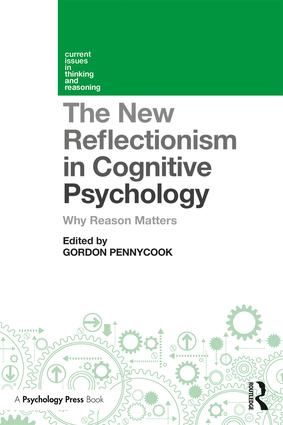
| Pennycook, G. (2018). Why reason matters: An introduction. In G. Pennycook (Ed.). The New Reflectionism in Cognitive Psychology: Why Reason Matters. Hove, UK: Psychology Press. |
| Barr, N. & Pennycook, G. (2018). Why reason matters: Connecting research on human reason to the challenges of the anthropocene. In G. Pennycook (Ed.). The New Reflectionism in Cognitive Psychology: Why Reason Matters. Hove, UK: Psychology Press. |
| Pennycook, G. (2017). A perspective on the theoretical foundation of dual-process models. In W. De Neys (Ed.). Dual-Process 2.0. New York, NY: Psychology Press. PDF |
| Pennycook, G., Tranel, D., Warner, K., & Asp, E. W. (2017). Beyond reasonable doubt: Cognitive and neuropsychological implications for religious disbelief. In A. Coles (Ed.). Neurology of Religion. Cambridge: Cambridge University Press. PDF |
| Pennycook, G. & Thompson, V.A. (2016). Base-rate neglect. In R. Pohl (Ed.). Cognitive Illusions: Intriguing Phenomena in Thinking, Judgment, and Memory (2nd ed.). Hove, UK: Psychology Press. PDF |

 Gordon Pennycook